

SMHS to hear from midwives in national study to future proof the midwifery workforce
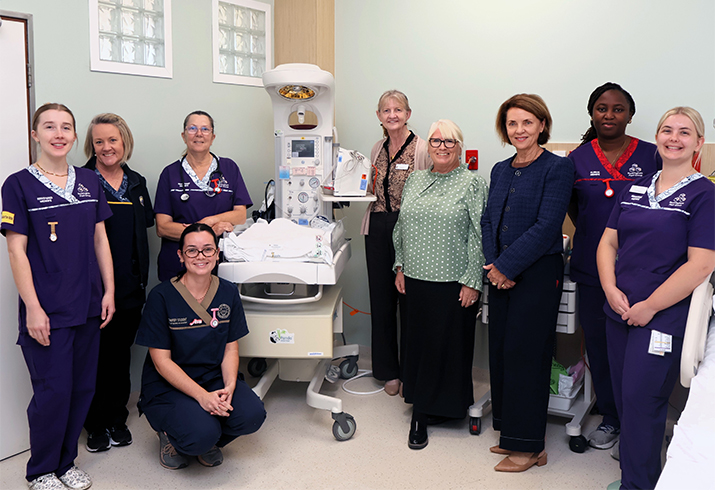
Ensuring pregnant and birthing women have midwives to care for them now and into the future, South Metropolitan Health Service (SMHS) is participating in a national study that will hear the voices of midwives to ensure the sustainability of their workforce.
Funded by the Australian Nursing and Midwifery Federation, the ‘FUCHSIA study’ is a national, cross-sectional survey exploring health, wellbeing, and sustainability of the midwifery workforce in Australia. It involves an online survey being sent to midwives and midwifery students practising in any context to assess characteristics of maternity services and the midwifery workforce.
Participating across all SMHS maternity sites including Fiona Stanley Hospital (FSH), Rockingham General Hospital and Peel Health Campus, FSH A/Coordinator of Nursing and Midwifery Leanne Graham said the study will identify the critical factors that affect the retention and attrition of midwives in the maternity care sector, which are important to inform strategies that can protect the workforce.
“While FSH has already adopted a number of strategies to achieve full midwifery recruitment, we want to ensure there are enough midwives for the future, and midwives views are critical in this” Leanne said.
“Some strategies we’ve implemented based on local feedback, include research fellowships for midwives, professional collegiality, paid student midwife model and continuity models of midwifery care that enable midwives to work to their full scope of practice and direct entry midwifery.
“We also work with our midwives on stress management and fatigue reduction, and consideration of individuals career aspirations supported by values-based leadership.
“A fully recruited workforce ensures more compassionate engaged midwives providing trauma-informed, safe and quality care,” Leanne said.
Rockingham General Hospital Nursing and Midwifery Co Director, Adjunct Associate Professor Tracy Martin said data that accurately reflects midwifery staffing and skill mix was needed, and that this study will provide a national perspective to support maternity services to address the workforce challenges now and into the future.
“Understanding why midwives are not working in midwifery and what we as an organisation can do to attract and retain this workforce is critical to continuing to provide women-centred maternity care,” Tracy said.
“This could potentially be a game-changer for maternity services, where midwives can practice as midwives to the top of their scope of practice, in models of care they are educated to provide and where every pregnant woman has access to a midwife in the first trimester.
“We know this significantly improves engagement with antenatal care, reduces smoking and other risk-taking behaviours, reduces early term birth and promotes consistent evidence-based care.
“Midwives are pivotal in the provision of sexual and reproductive health and by enabling midwives we are empowering women to engage with screening and preventative programs,” Tracy said.
The Australian Nursing and Midwifery Federation is funding La Trobe University researchers Professor Della Forster and Ms Robyn Matthews to undertake the study and SMHS hospitals are collaborating sites.
Data collection is underway, and it is anticipated we will start to see some themes emerging in the next 12 to 18 months, with the final project report being completed in the latter part of 2028.
5 May is the International Day of the Midwife with the official theme for 2026 being ‘One Million More Midwives’.
Keep up to date with our news and achievements
Find out more on Facebook (external site) or LinkedIn (external site)