

Rockingham General Hospital introduces VELYS robotic technology for knee surgery
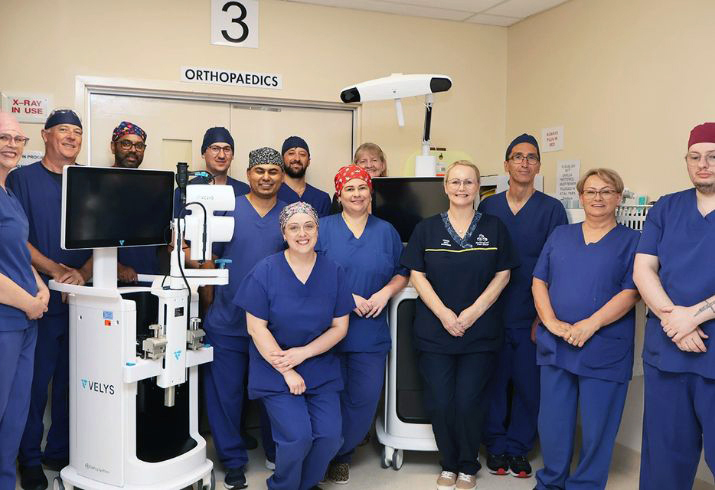
Rockingham General Hospital (RGH) is the first WA Health hospital to introduce the VELYS Robotic Assisted Solution, a new technology that helps surgeons perform knee replacements with greater accuracy.
Used by an orthopaedic surgeon, the system maps a patient’s knee in real time giving them detailed information about alignment, range of motion and soft tissue balance before any bone cuts are made. The surgeon then performs the bone cuts with a saw attached to the VELYS system to complete the procedure with guided precision.
RGH Orthopaedic Consultant, Michael Finsterwald, said the system improves accuracy during surgery, making the whole process more consistent and reduces the chances of unexpected results.
“The VELYS is a flexible system that allows surgeons to work in the way they prefer.”
“It also gives real‑time information about how the knee is moving and responding, which helps plan where to place the new joint parts.
“This helps us to restore the natural movement of the knee, which will hopefully lead to better comfort and overall satisfaction for patients”.
Another key benefit of VELYS is that it does not require a pre‑operative CT scan. Instead, it collects live measurements during surgery, reducing both radiation exposure and an appointment attendance visit to the radiology department, streamlining the process and wait times for patients.
RGH completed significant planning to introduce the system safely, including training for all surgical and sterile services staff and reviewing theatre infrastructure.
The technology is also expected to improve efficiency across the surgical service at RGH. Clinical Nurse Specialist of Perioperative Services, Marita Soutar, said staff have seen immediate benefits.
“Ultimately this system will reduce the number instrument trays required for each case, leading to less reprocessing, less manual handling and therefore improving efficiency and storage demands,” she said.
The benefit for local patients especially those requiring complex knee replacement surgery will be significant as they will now be able to be access this advanced technology closer to home. This will improve the accuracy of their surgery and potentially enhance recovery.
Also, as a teaching hospital, RGH expects the new system to enhance training opportunities for orthopaedic registrars.
By embracing this innovative technology, RGH is further strengthening its commitment to patient‑centred care, delivering safer surgeries, smoother recoveries and a more streamlined experience for patients.
Keep up to date with our news and achievements
Find out more on Facebook (external site) or LinkedIn (external site)